

Courage and Compromise
Selective Civil Rights history is fueling strategic confusion on today’s left

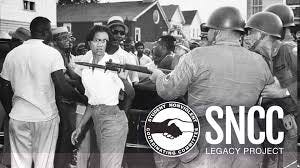
“We may not have chosen the time, but the time has chosen us.” ~John Lewis
Purity Isn’t a Strategy
Selective Civil Rights history — and why it matters now
In progressive spaces today — especially in debates over Israel–Palestine — invoking the progressive civil rights organizations of the 60’s has become shorthand for refusing compromise.
“SNCC didn’t compromise.”
The implication is clear: negotiation equals betrayal. Incremental change equals weakness. Institutional engagement equals complicity.
It’s a powerful line.
It’s also incomplete history.
And incomplete history makes weak strategy.
The Civil Rights Movement Was an Ecosystem, Not a Vibe
SNCC was courageous. It was disruptive. It forced America to confront its violence and hypocrisy.
But it did not operate alone.
The movement included:
Civil rights litigators
Members of Congress willing to spend political capital
There were deep disagreements — over tone, pace, alliances, and electoral politics. Tension was constant.
But tension did not prevent coalition.
It created leverage.
Different actors played different roles. Disruptors generated crisis. Negotiators translated crisis into law.
That ecosystem — not ideological uniformity — produced durable change.
“Street protest created urgency. Legislation created enforceable power.”
Law, Not Performative Aesthetics, Shifted Power
The Civil Rights Act of 1964 passed the Senate 73–27 after the longest filibuster in its history at the time.
The Voting Rights Act of 1965 passed 79–18.
Those margins required cross-party votes, compromise language, and institutional strategy.
The Voting Rights Act’s preclearance provision placed discriminatory jurisdictions under federal oversight. In Mississippi, Black voter registration rose from roughly 6% in 1964 to nearly 60% by 1968.
That is not symbolism.
That is structural power.
Street protest created moral urgency.
Legislation created enforceable authority.
Movements that refuse to convert protest into policy eventually stall.
Harm Reduction Was Not Capitulation
There is a growing strain of political culture that treats compromise as contamination.
But civil rights leaders understood something fundamental about power:
Perfect justice was not immediately achievable.
Partial victories still saved lives (Harm Reduction).
The Civil Rights Act did not eliminate racism.
The Voting Rights Act did not permanently end voter suppression (as seen after Shelby County v. Holder weakened federal oversight).
But those laws shifted the terrain of political participation for millions.
That is what durable progress looks like.
Even SNCC evolved. Internal ideological hardening eventually narrowed its coalition leverage. Meanwhile, leaders like John Lewis moved into institutional politics and advanced civil rights from inside government for decades.
Protest and governance were not opposites.
They were stages of power-building.
When Israel–Gaza Becomes a Litmus Test
This selective reading of history is now shaping progressive politics nationwide.
Gaza has become a litmus test in races far removed from foreign policy — municipal, state, and federal alike.
Regardless of the position they’re running for, candidates are written off unless they reject compromise and lean into the most extreme rhetoric.
That is not strategic clarity.
That is ideological gatekeeping.
It is legitimate to demand:
Protection of civilians
Humanitarian access
Accountability under international law
Responsible oversight of U.S. aid
Transparency about lobbying influence, including the role of American Israel Public Affairs Committee
But serious analysis requires structural context.
In the 2024 election cycle, AIPAC-affiliated groups reportedly spent over $100 million in congressional races. That is substantial.
It is also true that total outside spending in federal elections exceeded $4.5 billion — driven by corporate PACs, industry groups, ideological super PACs, and dark-money organizations across sectors.
The campaign finance architecture shaped by Citizens United v. FEC permits unlimited independent expenditures.
The structural issue is concentrated money in politics — not the existence of a single influential organization.
When one foreign policy issue becomes the singular sorting mechanism for progressive seal of approval, movements shrink. Coalition math collapses. Governance becomes secondary to rhetorical alignment.
The Civil Rights Movement did not demand ideological uniformity on every global issue to desegregate Birmingham or secure federal voting protections.
It prioritized leverage.
It sequenced demands.
It understood votes.
“Purity feels powerful. Power requires strategy.”
Selective Memory Weakens Movements
When progressive organizations like SNCC gets invoked to defend rigid purity, people take the drama of its radicalism but leave out the careful strategy that made it work.
It remembers confrontation.
It forgets coalition-building.
It remembers moral fire.
It forgets legislative arithmetic.
Movements that cannot translate protest into institutional change often discover that outrage alone does not redesign systems.
Purity feels powerful.
Power requires strategy.
The Inheritance
Moral clarity matters.
Disciplined strategy protects the vulnerable.
We can insist on Palestinians’ right to exist with dignity and security.
We can agree on Israeli security.
We can critique U.S. foreign policy.
We can challenge the influence of money in politics.
And we can do all of that without mistaking absolutism for strength.
The Civil Rights generation did not win because they shouted the loudest.
They won because they understood power — when to disrupt it, when to negotiate with it, and how to institutionalize gains.
If we are going to claim and continue their legacy, we should inherit the full tradition:
Courage.
Coalition.
Negotiation.
Enforceable law.
The Civil Rights Movement wasn’t about perfection.
It was strategic and effective.
And effectiveness — not performative militancy — is what changes history.
🚨 Influencers and strategists have a responsibility. Amplifying absolutist rhetoric stokes outrage but doesn’t offer solutions. It breeds apathy (“both sides are the same”) or distrust of politics.
💡 Real change comes from informed, strategic action: voting, organizing, civic engagement. Outrage alone won’t move the needle — knowing how to use your power will.
“Every right we have exists because citizens before us chose participation over silence.”
If you like what you read you can support this publication and other projects…
Support our mission to increase civic engagement and consider becoming a paid subscriber. To honor the ancestors who paved the way —a discount!
Advocacy Arena Network:
Join the chat on our bi-weekly live “Fired Up Friday” here at 4:30p EST
🎙️Podcast: (Connections & Conversations with Dee Batiste)
SOCIALS:
🐳Spoutible: Good Trouble Chat & DEEscussions
YouTube: Fired Up Fridays & Democracy Roundtable Archives
Advocacy Arena is a reader-supported publication. To receive new posts and support my work to increase civic engagement, consider becoming a free or paid subscriber.
Sources:
The Black Church’s role in the Civil Rights Movement, Detroit City of Peace
Interviews from Eyes on the Prize: America's Civil Rights Years, 1954-1965
The Experiences of Civil Rights Lawyers in the 1950s and 1960s
Brown v. Board of Education The Case that Transformed America
60 Years of Freedom Summer Legacies and Lessons from the Trailblazing Voting Rights Project